Air Force starting to game out sustainment framework for CCA drones
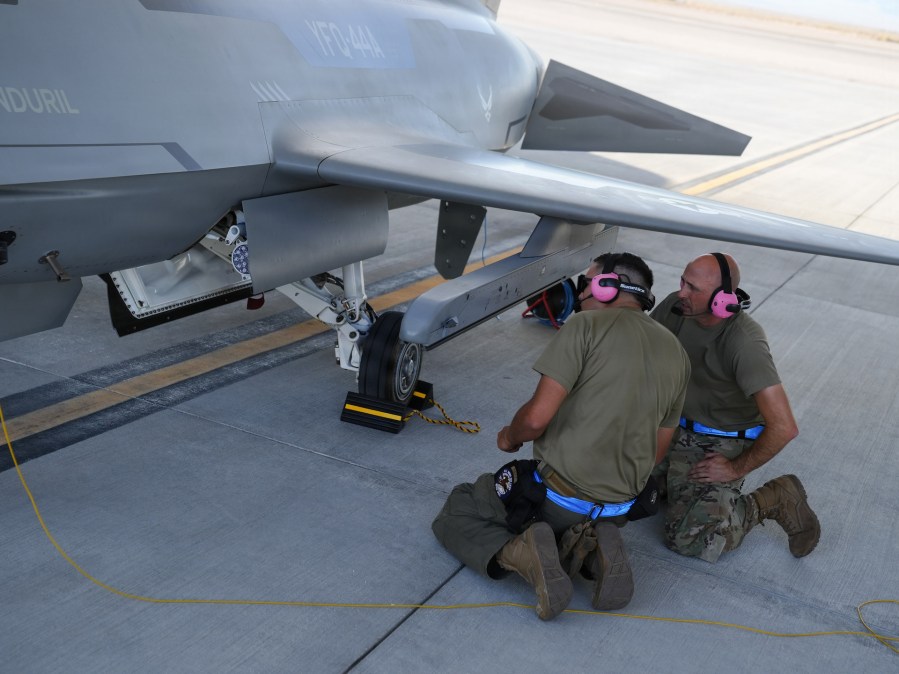
Air Force officials are in the early stages of developing a sustainment plan for Collaborative Combat Aircraft so that the enterprise is ready when the next-generation drones are fielded, according to the head of Air Force Materiel Command.
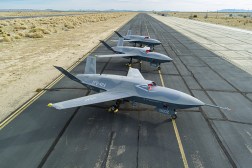
The service plans to field 500 CCA platforms by 2032, and expects the robotic fighter jets to fly alongside its manned fifth- and sixth-generation planes and add capacity to the fleet.
Anduril and General Atomics have been tapped to produce the first increment of systems for the program, and Shield AI and RTX subsidiary Collins Aerospace were selected to provide mission autonomy capabilities for the initiative.
Once the unmanned systems are fielded, the Air Force will need its maintenance enterprise to help keep them flying and ready for combat.
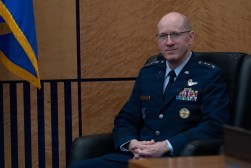
“Honestly, we’re just starting to develop the sustainment framework for the CCAs,” Lt. Gen. Linda Hurry, commander of Air Force Materiel Command, said Wednesday during a Mitchell Institute for Aerospace Studies event.
“The good news is we’re starting very early, and we’re going to connect with the sustainment center, with our supply chain professionals, and the providers of our aircraft right now to make sure that we have a good, solid understanding of what our [Life Cycle Sustainment Plan] might look like, the whole collective sustainment plan. It is not fully fleshed out at this point, but like I said, the good news is we’re starting early to make sure that we understand where we’re going so that we can establish the right supply chain, the right second- and third-order tier suppliers to make sure they’re all lined up, so that if the Air Force chooses to buy a certain number of aircraft, we can be ready when that time comes,” Hurry said.
Meanwhile, the Air Force’s sustainment enterprise is facing challenges and shortages as it tries to boost the readiness of the service’s existing aircraft.
“One of the things that we’re really focused on right now is hiring our depot artisans and our maintainers there. Right now, our sustainment center is about 2,600 billets short, but we’re hyper focused not only at the depot but throughout AFMC on our hiring activities,” Hurry said. “Holistically, AFMC’s got about 8,200 vacant billets right now. That’s maintainers, that’s engineers, that’s contracting professionals, you name it. And so, what we’re trying to do is do more targeted hiring activities and streamlined hiring activities.”
The service is also facing a $14 billion “hole” when it comes to spare parts, she noted.
“One, we have got to get money for spares, and then two, we’ve got to get those spares on our shelves and then out to where our mechanics actually need” them, Hurry said. “Getting the right parts is critical, and it’s a direct correlation to your readiness. If we don’t have the parts, we don’t have ready aircraft [and] we don’t have the readiness our nation needs.”
The Air Force is tapping into new technology like AI and quantum capabilities to boost its sustainment enterprise, according to Hurry.
“In the past, we have been grossly inadequate … in our ability to forecast. Well, we’ve got quantum computing capabilities, and if we do quantum optimization, we can actually figure out the best parts by repair for our entire supply chain, and we’re using that right now to make sure that we’re getting after the right parts for the right aircraft, and we can ingest or increase readiness as much as we possibly can, all through quantum computing,” she said.
Hurry noted that the service also has a system called Predictive Analytics and Decision Assistant, or PANDA. The AI tool is geared toward predictive maintenance.
The tech is part of the Air Force’s “Condition Based Maintenance Plus” initiative.
“If we can actually put this into a system and predict where the next failure is going to be, and then link it with the supply chain so that the parts are actually available, we can optimize those precious hours of our maintainers,” Hurry said. “We know our aircraft are getting older, but if we can use the PANDA system — and we are in fact using it — we can predict … when do we have to take a jet down, and we can actually control our own destiny a little bit.”