‘Expose your interfaces’: Army pushes industry to open up software for ‘hackathon’
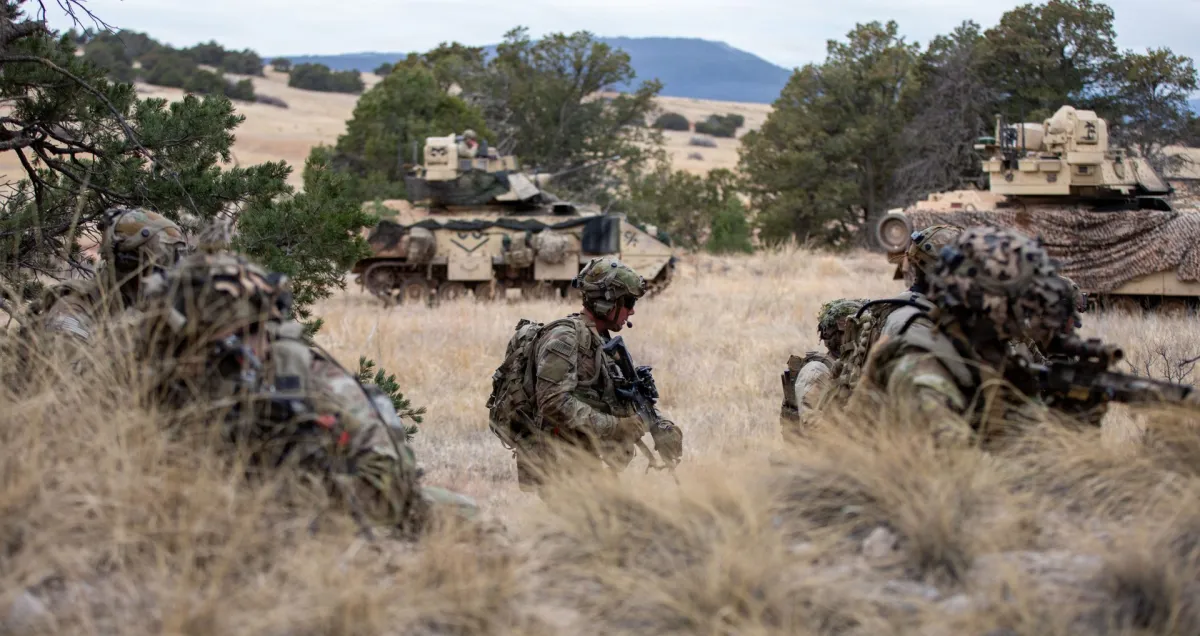
The Army, along with nine major defense companies, will embark on a series of “hackathons” later this month in an attempt to create a common operating system across the service’s disparate platforms.
The Army called the effort “Right to Integrate,” according to a Tuesday press release, which will include a “sprint” to shed conflicting information silos that have historically been a fixture of “exquisite warfighting systems” the service has purchased from industry. The integration of these platforms “frequently failed,” the service said.
From weapons to networks, military platforms have struggled to communicate with each other. Officials, citing modern conflicts, have said that the ability to quickly inventory and move data between domains so troops can make faster decisions on the battlefield is key to success.
Now, the service is pushing major contractors to open their books to build a common architecture across products they sell to the Army, an often contentious topic for industry reticent to share internal processes.
“We are setting conditions to where being open is industry’s ticket to participate,” said Dr. Alex Miller, chief technology officer for the Army. “If you do not expose your interfaces and your documentation, you will not be able to join the ecosystem. This will be especially true for autonomous systems.”
Anduril, Boeing, General Dynamics, L3Harris, Lockheed Martin, Northrop Grumman, Palantir, Perennial Autonomy, and RTX are all participating, according to the press release. The first event will be held at Fort Carson, Colorado, in the coming weeks.
Ukraine mandated companies contributing to its war effort — from drones, sensors and other weapons — to expose their Application Programming Interfaces, the Army said, which led to Kyiv’s military “quickly and effectively integrat[ing] information across all platforms.”
“We’ve known for a long time that our systems, weapons, and sensors need to talk to each other so that we can dominate the battlefield,” said Army Secretary Dan Driscoll. “The war in Ukraine showed the world that speed matters and an open architecture construct is highly effective in high-intensity warfare. We haven’t been moving fast enough.”
The service made progress with building an open-architecture system via its Next Generation Command and Control platform, or NGC2, but needed to expand to a “broader array of systems,” officials said.
“We’ve seen the cost of integration approach zero in the commercial space — especially with software systems with open interfaces and architectures,” Miller said. “We have seen standards come and go in the department for decades, but are still beholden to sub-par implementation, close and proprietary interfaces, or systems that lack the flexibility to adapt over time.”