Pentagon selects Shield AI to plug swarm software into LUCAS drone, company says
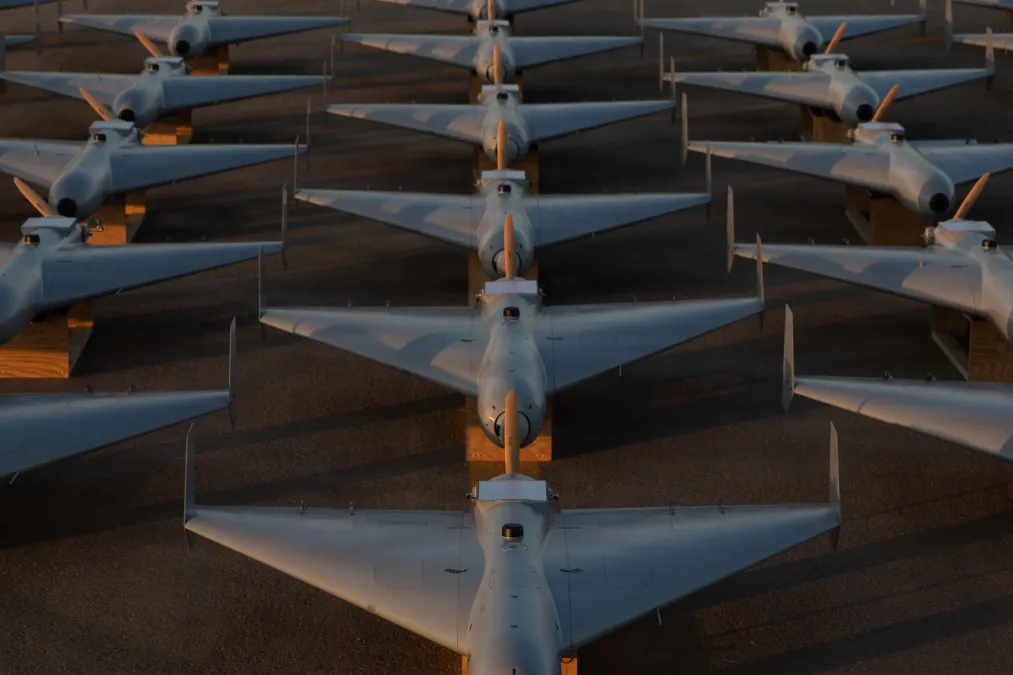
The Pentagon selected Shield AI to integrate swarm technology onto the Low-Cost Uncrewed Combat Attack System (LUCAS), a one-way attack drone the U.S. military cloned from an Iranian variant, according to the company.
U.S. Central Command said it used the LUCAS for the first time in combat against Iran during Operation Epic Fury, though the military produced just dozens of the systems initially, according to the Pentagon’s chief technology officer in March.
Now, Shield AI said its Hivemind software will “serve as the AI pilot for the LUCAS program, enabling groups of drones to coordinate, maneuver, and adapt together to changing conditions in real time, based on warfighter input,” according to a Tuesday press release from the company.
Shield AI said Hivemind will allow the LUCAS to “sense, decide, and act independently, without human intervention,” though it will require one human operator to “command a swarm of autonomous systems operating together.”
“The effort marks a major step toward operationalizing collaborative autonomy: teams of autonomous systems working together in dynamic and communications-constrained environments under the supervision of a single operator,” according to the press release.
Shield AI said it will demonstrate the capability this fall but didn’t specify when and declined to say whether the Pentagon’s selection was tied to an existing contract.
The U.S. military rushed to field drone and counter-drone technology during the outset of the Iran War, which has largely been defined as a conflict of attrition. Iranian Shaheds were less expensive than the counter-measures U.S. troops were using to down them, highlighting a stark imbalance between low-cost drones and pricey defense systems.
The LUCAS first launched from a littoral combat ship in December during a Middle East exercise, and its cost ranges in the mid-to-low tens of thousands.
The Trump administration is requesting $53.6 billion for autonomy, drone platforms and contested logistics solutions, as well as $21 billion for munitions, counter-drone systems and collaborative combat aircraft in fiscal 2027, DefenseScoop previously reported.
Research, test and evaluation programs for the drone-focused Defense Autonomous Warfare Group also saw a massive increase in the proposed budget.
“Unlike traditional autopilots that cannot deviate from preplanned routes, Hivemind dynamically reroutes mission plans, responds to unexpected conditions, avoids obstacles, and executes complex tasks safely and effectively,” Shield AI said.