Draft NDAA would dissolve Space Development Agency, Rapid Capabilities Office
Amid the Defense Department’s wide-reaching reforms of how it buys capabilities, lawmakers are proposing to get rid of two Space Force organizations that currently hold semi-autonomous acquisition authorities.
The House Armed Services Committee published the chairman’s mark of the fiscal 2027 National Defense Authorization Act on Tuesday that includes language to eliminate the Space Development Agency and the Space Rapid Capabilities Office. If the draft legislation becomes law, authorities of both SDA and the RCO would transfer to the Space Force’s new portfolio acquisition executives (PAEs).
The fates of both organizations have been in question since Secretary of Defense Pete Hegseth introduced sweeping acquisition reforms across the Pentagon in 2025. The reorganization established PAEs that oversee multiple programs under a specific mission area, while also granting executives greater acquisition authority.
The Space Rapid Capabilities Office and Space Development Agency were created by Congress in 2018 and 2019, respectively. While the organizations focused on separate missions, they were explicitly established as independent units to develop and field new space capabilities much faster than traditional acquisition efforts.
The legislative language to eliminate SDA and the RCO still has to be approved by both the House and Senate chambers before becoming final. The HASC is slated to debate the draft legislation on June 4.
Given that the entire Pentagon is adopting a similar mindset, the proposal to dissolve both organizations is not a surprise. Leaders across the Department of the Air Force have hinted for months that the shift to PAE structures meant changes were imminent.
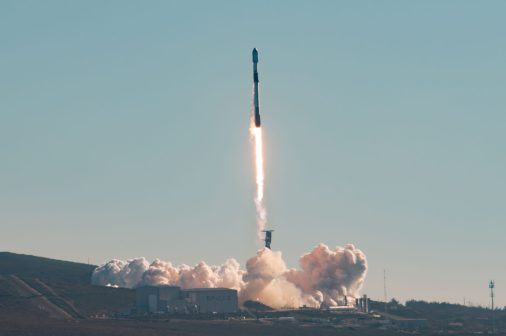
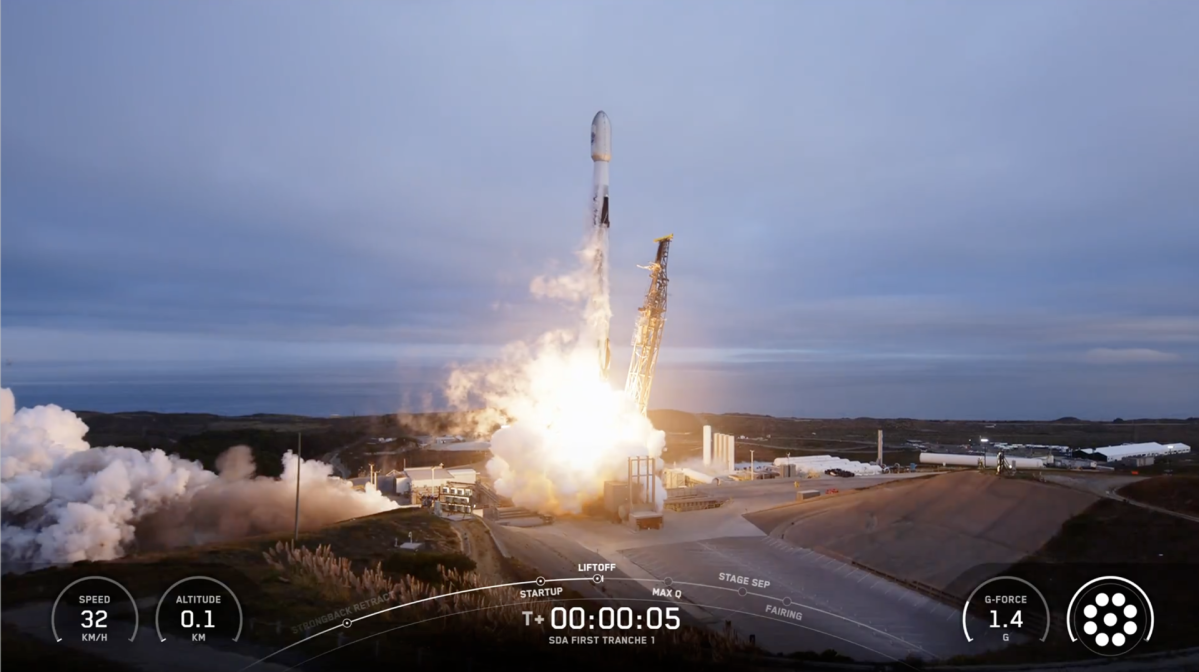
The Space Development Agency is primarily focused on rapidly fielding a mega-constellation in low-Earth orbit known as the Proliferated Warfighter Space Architecture (PWSA), comprising data transport and missile warning and tracking satellites developed in tranches. The agency is in the midst of launching its first operational batch of space vehicles, while also managing development of the next tranches.
Since its inception, the PWSA has been a linchpin for the Space Force’s shift from using small numbers of exquisite military satellites to proliferating hundreds of inexpensive birds to build resiliency.
However, both the program and SDA have had their share of struggles over the years — including delays caused by supply chain limitations, challenges in proving the PWSA’s technology and leadership controversies.
Per the HASC chairman’s mark, the role of SDA director would become responsible for the Space Force’s missile warning and tracking programs. On May 19, the agency announced that Gurpartap “GP” Sandhoo would serve as both SDA director and the Space Force’s PAE for missile warning and tracking — likely anticipating the upcoming changes.
As for future data transport satellites, the Space Force wants to move away from the PWSA’s tranches and instead pursue a sprawling architecture known as the Space Data Network (SDN). Satellites already developed and deployed for the PWSA will work alongside future capabilities in the SDN, according to the service.
Meanwhile, the Space RCO is tasked with expediting development and production of space capabilities that fill immediate capability gaps. The office is much smaller than SDA, but has worked directly with combatant commands to understand mission requirements and search for solutions.
Most of the RCO’s programs are classified, although a few have become public knowledge — such as the Rapid Resilient Command and Control (R2C2) effort to expand and modernize ground stations with cloud technology.
The Space Force has already created several new PAEs, with more on the way. However, the service is still in the process of organizing what programs will be assigned to the specific PAEs — including those run by SDA and the RCO, according to Thomas Ainsworth, acting space acquisition executive.
“They have the same authorities,” Ainsworth said Wednesday during the State of the Space Industrial Base event hosted by NewSpace Nexus. “If you move between one PAE and another, you’re not sitting there having to figure out a whole new process. Everyone’s working off of the same process in the same rulebook.”