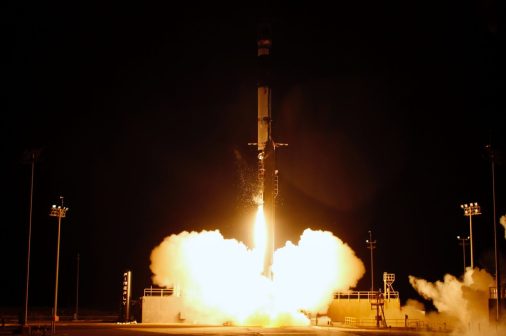
Space Force sets another record with rapid launch of Victus Haze mission
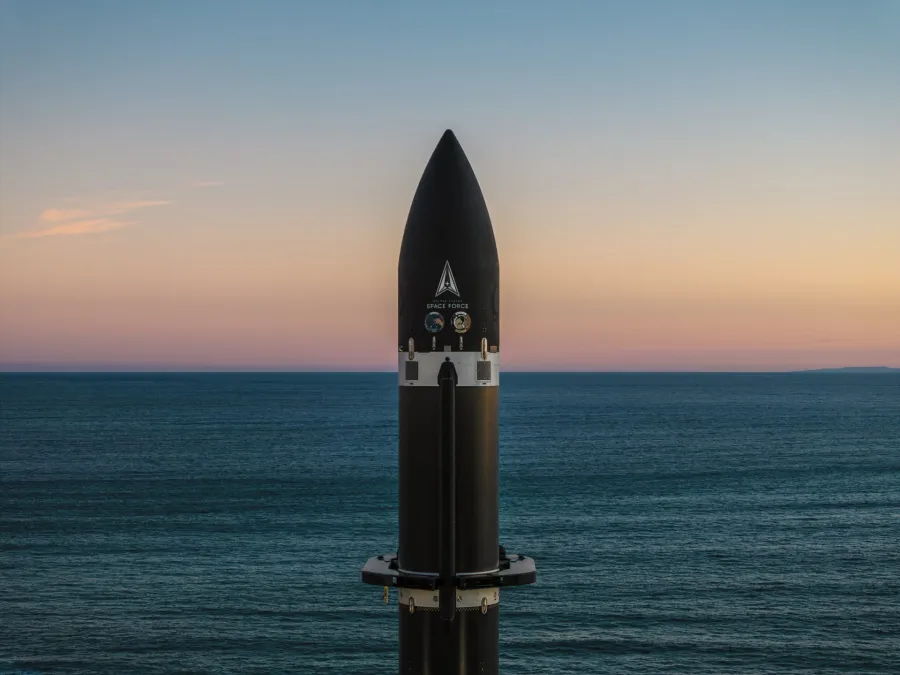
Rocket Lab successfully launched a military payload into orbit on Friday less than 17 hours after receiving orders from the Space Force, once again advancing the service’s ability to quickly put new satellites on orbit.
The company’s Pioneer payload was launched aboard a Rocket Lab Electron space vehicle from the firm’s private launch site in Mahia, New Zealand, as part of the Space Force’s Victus Haze mission. The mission was conducted just 16 hours and 42 minutes after Rocket Lab received the service’s notice-to-launch — breaking the Space Force’s previous order-to-launch record by over 10 hours.
Once on-orbit checkout for Electron is complete, the service will begin demonstrating rendezvous and proximity operations (RPO) in low-Earth orbit with True Anomaly’s Jackal satellite that was launched into orbit in May, according to the service. Both companies were tapped by Space Systems Command and the Defense Innovation Unit for the Victus Haze mission in 2024.
“VICTUS HAZE set out to demonstrate our ability to respond to irresponsible behavior on orbit under operationally realistic conditions, and we are doing just that, leveraging commercial partnerships to maximize flexibility and minimize cost,” Col. Bryon McClain, acting portfolio acquisition executive for space combat power, said in a statement.
Victus Haze is part of the Space Force’s Tactically Responsive Space (TacRS) effort, which aims to drastically reduce the time it takes to launch national security payloads. If it comes to fruition, the capability would allow the service to immediately respond to on-orbit threats or replace satellites that have been targeted by adversaries.
The service’s previous rapid launch record was set in 2023 when the Victus Nox mission was lifted into orbit 27 hours after the Space Force greenlit the launch — a significant milestone considering that most national security launches take several weeks or months to complete.
The Space Force has since worked on reducing those timelines even further, a process that involves close collaboration with the space industry.
Prior to the mission, Rocket Lab was on standby before being directed to “activate to an alert status,” a process that took less than 48 hours. Eventually, the service issued a notice-to-launch order that required Rocket Lab “to posture for launch to a previously unknown orbit within their performance ability with only a 24-hour notice,” the Space Force said in a news release.
“Our launch-plus-spacecraft integrated mission capability is transformative for responsive space,” Rocket Lab CEO Peter Beck said in a statement. “By launching on demand with spacecraft at-the-ready we’ve shown we can secure and defend the nation’s space interests rapidly, and that’s a powerful capability for the United States and its allies.”
Both Rocket Lab’s Pioneer and True Anomaly’s Jackal systems will now transition to conducting RPO threat response demonstrations as part of the Victus Haze mission, according to the service.
The satellites will complete complex orbital maneuvers to test the Space Force’s ability to maneuver close to other space vehicles for space domain awareness and characterization operations.
“Not only does this mission open the door for acquisition of follow-on vehicles that allow our warfighters to close critical gaps and seams in a conflict scenario, it also presents a more immediate value by giving our current operators a crucial opportunity to exercise and improve LEO RPO tactics, techniques, and procedures,” Lt. Col. Lincoln Miller, Space Safari system program manager, said in a statement.
With Victus Haze completed, SSC has three more TacRS missions planned for the future. Those include Victus Surgo and Victus Salo — which will also demonstrate on-orbit maneuverability — as well as Victus Sol — which will deploy an operational payload to orbit.