In its next chapter, DIU aims to reduce the military’s ‘cost per kill’
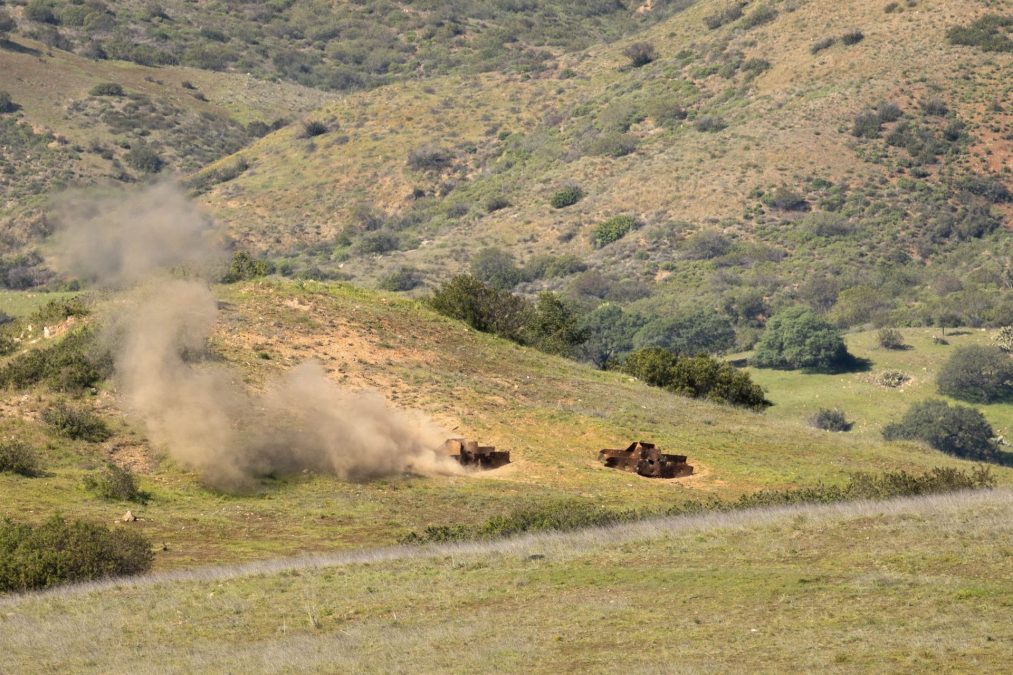
Elevated by its new status as an official Pentagon Field Activity, the Defense Innovation Unit is maturing with funding and permanence under the leadership of its new director, Owen West, who welcomes the pressure his team is under to speedily deliver “measurable” weaponry and combat power to the U.S. military.
“This could be my last job — I don’t care. I just want to make sure that we get drones in the hands of troops, and we build up a capability in space that cannot be matched for 10 years by our enemies,” West told DefenseScoop.
Before he was tapped by Defense Department leadership to steer DIU and took the helm earlier this year, West worked as trading partner-in-charge of Goldman Sachs’ global natural gas and U.S. power businesses, served as a platoon commander and a reconnaissance platoon commander in the Marine Corps, and as the former assistant secretary of defense for special operations during the first Trump administration.
He has set an aggressive agenda for the 11-year-old innovation hub, focusing on highly practical and quickly deployable technologies that have strong backing from service members who rely on them for real-world warfare.
In an exclusive interview with DefenseScoop, West shared new details about his vision to reshape DIU’s operational structure to fit its modern mission, implement more outcomes-based approaches to spark tangible results in the near term, and introduce new mechanisms to score the unit’s progress in fielding capabilities and reducing the military’s “cost per kill.”
“If you want good performance, you measure it. If you want over-performance, you measure it — then you publish it,” West said.
The reorganization
DIU was originally set up in 2015 by then-Defense Secretary Ash Carter to help Pentagon components identify and field cutting-edge commercial technologies for the military at a pace that was faster and less costly than traditional government purchasing methods would permit.
In its early years, the Silicon Valley-headquartered innovation hub primarily focused on building a foundational bridge between the Defense Department and commercial tech sector. The unit matured to prioritize rapid prototyping for military customers.
‘DIU 3.0’ emerged more recently under the Biden administration. The unit’s last permanent director before West — former Apple executive and Navy reservist Doug Beck — coined the term for that phase, which was billed as a pivot to rapidly resolve the military’s most critical capability gaps with modern, industry-made assets.
“First was the startup phase, where [DIU’s first director, Raj Shah] and ultimately [the unit’s next chief Mike Brown] had very little budget,” West said. “Then it was the budgetary phase, where [Beck] had grown the business tremendously, and it’s been given a healthy billion-dollar budget right now.”
The office is entering a chapter where it focuses not only on rapidly providing capabilities across the joint force, but also tracking and measuring its impacts and deliveries.
“At DIU, we’re going from seven core technology portfolios to three,” West said.
The seven portfolios that were prioritized under Beck and the Biden administration covered artificial intelligence, autonomy, cyber, energy, human systems, space, and emerging technology.
Those are being collapsed and combined into three new technology portfolios, which West confirmed will include drones and autonomous warfare; kill webs associated with commercial space, networks, sensors, and broader command and control assets; and “10x” technologies that deliver non‑incremental shifts in price, speed, or capability.
“We have interim directors of all the portfolios, but we may hire from the outside if we encounter an exceptional candidate,” West told DefenseScoop.
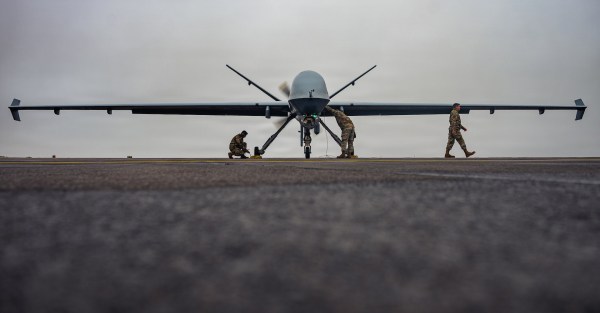
The drones and autonomous warfare team will oversee all of DIU’s sprawling work involving unmanned platforms, features that power them and means to counter them. The portfolio focusing on kill webs will harness recent price drops and increasing diversification across the realm of commercial space capabilities — including by working much more closely with the U.S. Space Force. And regarding the new 10x technologies portfolio, West said personnel are “only going to be taking on things that really help the secretary pivot the force quickly.”
In this transition, the director said, AI “becomes a key horizontal, infused into all parts of the business.”
Officials will continue to pilot special projects to enable AI for the military at the leading edge of the commercial frontier. Most of the elements from all of DIU’s other, now-defunct portfolios are largely being folded into the three new ones.
West noted that “all of this is also coming at a time where you have two other external factors that make our reorganization really important.”
The first of those, as he put it, is $250 billion of venture and other capital flowing into the defense tech space. The second factor is related to how other nations have simultaneously plowed into low-cost, high-tech manufacturing, mass production and fielding of weapons capabilities.
“Most specifically in Ukraine — but if we just take drones, for example, we see this dramatic cost exchange occurring in Colombia, Azerbaijan, Thailand — it’s not just Ukraine,” West said. “So, [Defense Secretary Pete Hegseth] is determined to get on the other side of this cost exchange, and he has tasked DIU with reducing our cost per kill, and dramatically so.”
DIU is a main player in two major Pentagon-led initiatives to drive drone adoption across the services.
The unit is a joint administrator for the $1 billion Drone Dominance Program (DDP), through which DOD is quickly buying and fielding hundreds of thousands of low-cost, lethal, one-way attack drones for real-world combat. It also serves as the primary commercial industry interface for the department’s new Direct Reporting Portfolio Manager for Unmanned Systems (DRPM-UxS).
West said that while the focus for DDP is the first-person-view drones that make up the majority of the casualties in the ongoing Russia-Ukraine war, that marks only a small slice of the Pentagon’s complete unmanned systems portfolio that the DRPM-UxS is going to build.
“So, DIU stands ready to run the drone dominance playbook,” he told DefenseScoop.
Metrics and outcomes
Defense secretaries can designate specialized “Field Activity” organizations to consolidate and accelerate in-demand supply and service functions that are common across multiple military branches.
When Hegseth appointed West to serve as DIU’s permanent director in the second Trump administration in January, he also simultaneously established the unit as a new DOD Field Activity.
“We’re a mature business now — and as a field activity, we now have permanence within the department,” West said. “So we have to deliver in clear terms operational combat power to the field.”
This designation, in his view, makes DIU’s role and obligation to speed up procurements and adoption of new capabilities unambiguous to all stakeholders.
“We just can’t do business the old way,” West explained, “especially when we win every engagement in combat, yet we lose many of those in terms of net costs.”
Part of Hegseth’s overarching intent as secretary, he noted, involves bringing defense assets to bear at scale, then reducing the military’s metric for cost per enemy killed.
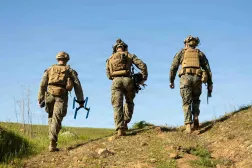
“The easiest way to think about this, although it extends beyond drones, is to focus on technology to substitute machines, fires, or electrons for Americans in harm’s way,” West said.
In changing how DIU does business, he and the team are also introducing new tools to measure how and where the dollars spent by the organization are translated directly into the field. One of those will be digestible “scorecards,” which West said DIU will post online and share with Congress and its board of directors to promote accountability.
The unit will use that to evaluate and improve its outputs to DOD’s end users over time.
“Among those [metrics], I think one of them has always been speed to contracting, for instance — once you put out an indication of interest, how long does it take for something to go on contract. But we have to add many other things to this, such as fielded capabilities, cost reduction,” West noted. “So, you’ll see that that’ll be kind of a ‘part two’ coming out later this summer.”
He said he has experienced palpable top-down support from Hegseth, Deputy Defense Secretary Steve Feinberg and Under Secretary of Defense for Research and Engineering Emil Michael in his early months as DIU director.
“In meetings, they have set the example that they don’t really care about ‘performance art.’ They want to know what you have achieved for the frontline forces, or how you intend to achieve it,” West noted. “So there is a group of outsiders, if you will, who have come in, who speak the same language, and are only concerned with outcomes.”
Shortly before he was selected to lead DIU, West notably served as the top Pentagon staffer for the second Trump administration’s Department of Government Efficiency (DOGE) initiative. The disruptive campaign sought to uncover “waste, fraud and abuse,” and slash certain types of spending and personnel positions to enable savings for taxpayers.
When asked about DOGE’s impacts on DIU, West said that “to support growth” in contracting and its portfolios, the unit is reducing other aspects of its business — like travel accommodations and administrative expenses.
“And we’re net flat,” he noted.
DefenseScoop viewed a memorandum West recently sent to DIU’s entire workforce with instructions to ultimately “trade travel costs to fund combat power.”
He told personnel that altogether they’d attended 40 conferences since the beginning of 2026, “to varying degrees of impact to mission.” DIU also spent approximately half a million dollars in the travel year up to that point, he said, with business units having prioritized 332 conference requests for events that were hosted around the globe — “from London to Bangkok.”
“To ensure we pivot as the joint force demands, we are pushing the authority to authorize travel to the lowest business unit level. We trust our project leads and portfolio managers to quantitatively assess risk versus reward,” West wrote to all DIU staff. “If you lead a portfolio or function, own the trade-off. Kill the overhead, fund the overmatch.”
Editor’s Note: This is the first in a two-part series on DIU’s modern mission.