Air Force conducts tests of CCA ground control system prototypes
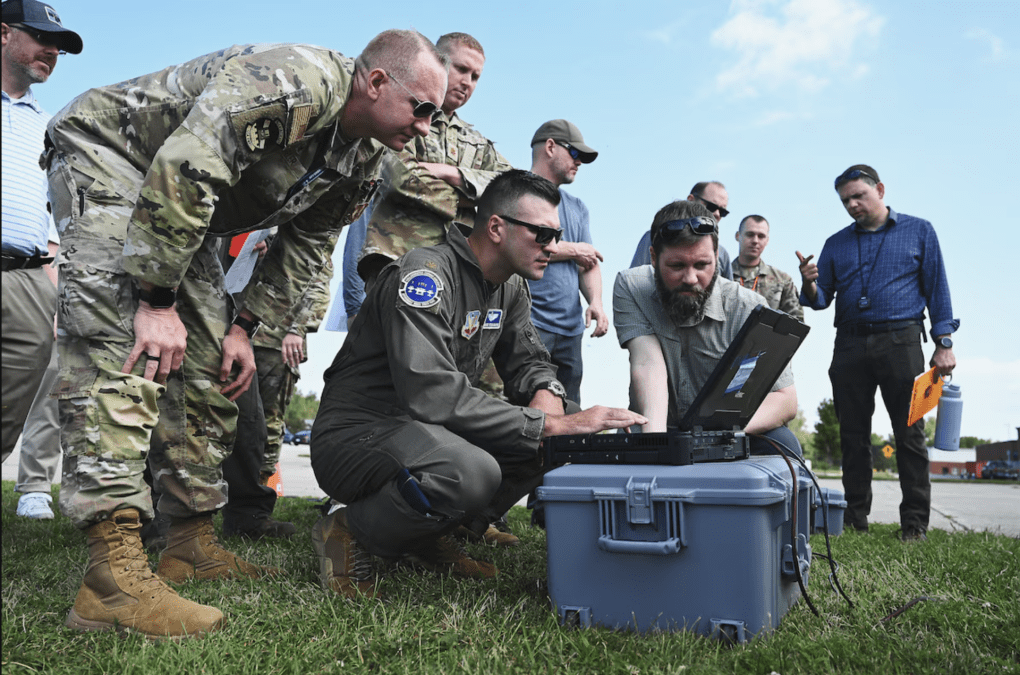
The Air Force recently evaluated prototypes designed to enable airmen to control Collaborative Combat Aircraft (CCA) drones from the ground via a portable system, the service announced Aug. 13.
Held at the Springfield Air National Guard Base in Ohio, the tests served as the initial assessment phase for the portable Command and Control Enclave (C2E) effort — a newly revealed capability being developed under the CCA program. The service is now a step closer to choosing a prime contractor that will serve as the C2E integrator, according to a news release.
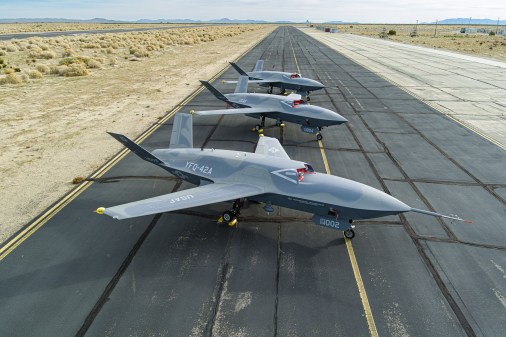
The CCA program is one of the Air Force’s most high-profile efforts. Considered a linchpin for air warfare modernization, the autonomous fighter jets are designed to fly alongside the service’s current fifth-generation platforms and future F-47 system to augment the manned fleet’s reach and capabilities.
Throughout the program’s development, Air Force officials have asserted that CCA drones will not be remotely piloted, and instead controlled via semi-autonomous software — either by human pilots from a nearby aircraft’s cockpit or operators using portable C2 platforms on the ground.
The C2E is one of the capabilities being designed for ground-based missions. The system will be key in supporting the Air Force’s approach to scatter deployed forces across dispersed battlefields of the Indo-Pacific, a strategy known as Agile Combat Employment.
According to the Air Force, multiple unnamed industry partners brought their C2E prototypes to the demonstration for the initial evaluation phase. During the tests, members of the Ohio Air National Guard’s 178th Wing first assessed the mobility and footprint of the ground control stations.
Later, vendors conducted demonstrations “specifically designed to showcase the software agility and seamless connectivity of their respective systems,” the service said in a news release.
Results from the C2E evaluations will inform the next stages of the program’s selection process and accelerate the Air Force’s overall acquisition strategy. According to the service, the second prototyping phase is expected to “begin soon” and will task industry to refine their systems’ cloud capabilities.
“Getting prototypes into the hands of our operational and acquisitions warfighters for a swift, combined evaluation is a direct embodiment of acquisition transformation,” Col. Eric Reagan, director of the Agile Development Office, said in a statement. “This partnership allows us to accelerate the fielding of the best-value capabilities to the Department of War,” he added, using the Trump administration’s preferred name for the Department of Defense.
The C2E program is another example of the Air Force’s relatively novel acquisition approach being used across the entire CCA enterprise. Rather than select a single prime contractor for all of the drone’s elements, the service is decoupling different aspects of the program — such as the CCA airframe and its autonomy software — and competing them across distinct contracts.
The service is developing the drones in increments, and has repeatedly stated it wants to bring multiple vendors into each batch’s production phase. Anduril and General Atomics were tapped for CCA Increment 1 airframes in June, and at least six vendors could move into the program’s second phase.