Air Force launches next phase of hypersonic missile program with $694M contract award for ARRW
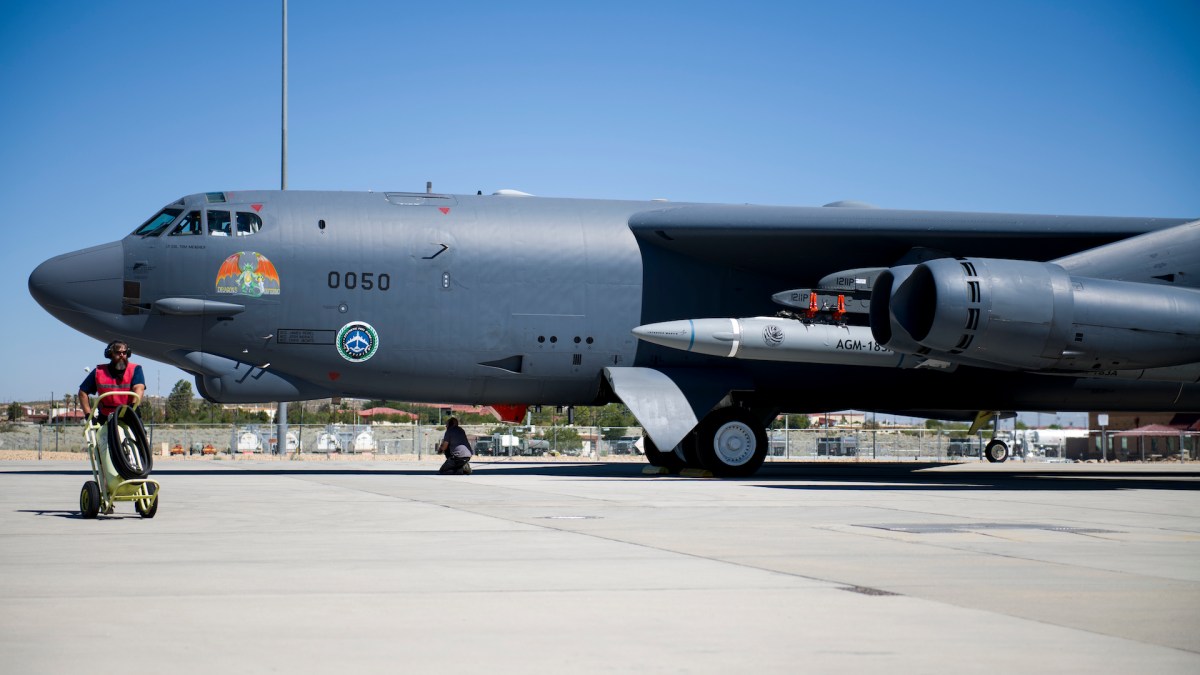
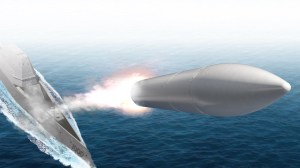
The Air Force recently took a major step in its pursuit of hypersonic missiles, awarding Lockheed Martin a $694 million production contract for a boost-glide system that can be carried by B-52 bombers.
The deal for the AGM-183A Air-Launched Rapid Response Weapon (ARRW) was awarded Sept. 29, according to a press release, although the service didn’t announce it until Monday.
The announcement withheld key details about the contract, such as quantities of missile purchases and delivery dates, citing a need to protect “operational security.”
The award is the latest turn in the saga of the ARRW program, which at one time seemed like it might not survive the budgetary axe following a series of setbacks during its development phase — including at least one failed all-up-round flight test that occurred in 2023 — and the prioritization of another initiative known as the Hypersonic Attack Cruise Missile (HACM).
However, the program was revived, and officials requested funding from Congress in fiscal 2026 to start production. The award for the new production contract came in the final days of fiscal 2026.
“This is a turning point in our advanced weapons roadmap,” Secretary of the Air Force Troy Meink said in a statement released Monday. “By moving ARRW from test to production, we’re providing our combatant commanders with a credible, high-speed strike weapon capable of penetrating the most advanced anti-access and area-denial systems.”
The Pentagon has invested billions of dollars to develop hypersonic weapons. In addition to the air-launched ARRW and HACM, other hypersonic systems that the military is working to field include the Army’s ground-launched Dark Eagle and the Navy’s sea-launched Conventional Prompt Strike.
Air Force Chief of Staff Gen. Ken Wilsbach said in a statement Monday that fielding ARRW will enhance the service’s ability to “hold targets at risk anywhere around the world” and provide the joint force with a “flexible and rapid response option for highly contested environments.”
In a press release issued Tuesday, Lockheed Martin said the system brings “sustained and maneuverable hypersonic capabilities to America’s Arsenal of Freedom and is the culmination of years of developmental and test partnership between Lockheed Martin and the U.S. Air Force.”
Mark Gunzinger, director for future concepts and capability assessments at the Mitchell Institute for Aerospace Studies and a former deputy assistant secretary of defense, called the production contract award “a real turning point” for the Air Force and the Pentagon.
The U.S. military needs an operational air-launched hypersonic weapon to create a future strike force capable of high-intensity warfare against peer adversaries like China, Russia, and others, he told DefenseScoop.
“Frankly, hypersonic weapons is one such capability where China has stolen a march on the United States, and I think this announcement is a real milestone in that effort to catch up and maintain our advantage, technological advantage as well as operational advantages over China. That’s exactly what we need to do to deter possible conflict in the Pacific,” Gunzinger added.
Hypersonics are intended to be highly survivable, he noted, “which is a combination of their speed and actual designs to reduce their signatures and so forth.”
They would most likely be used against “fleeting” or “time-sensitive” targets, Gunzinger said, such as highly mobile and relocatable weapon systems like missile launchers, and command-and-control platforms.
Carlton Haelig, a fellow in the Defense Program at the Center for a New American Security, said the movement of ARRW into production is “hugely” significant.
“In general, it’s a big step forward because it provides a, you know, more diverse capability set, but particularly just in the Air Force trying to get itself established and having operational hypersonic weapons capability,” Haelig told DefenseScoop.
Just a few years ago, the ARRW program appeared to be shelved, he noted.
“They were indicating that they were not going to be moving it to operational use. They concluded its [research, development, test and evaluation] spending. There were some failed or unsuccessful tests, and they were kind of cutting their losses and moving on to other programs. Now, sometime between then and last year when the budget documentation came out … obviously things changed,” he said. “Obviously through their testing and evaluation, they’ve identified that they have a viable, safe and effective platform that they’re comfortable with moving into initial procurement.”
Haelig noted that sometimes the military services keep programs in the research and development stage longer than they need to be, and that increases the costs associated with those programs and delays their eventual transition into the field and throughout the force.
“So, this could also be the type of decision where they say, ‘Look, we have enough ready to go forward with the Block A variant of ARRW. It’s ready, it’s safe, it’s effective. It can be integrated onto the platforms. Let’s move forward with this, and we’ll continue to iterate on what might eventually be a Block B. We don’t need that Block B solution to get in the way of the Block A capability’ that they seem to have available to them right now,” Haelig told DefenseScoop.
Gunzinger noted that ARRW systems will come with a relatively high price tag compared to many other types of munitions. His “informed guess” is that they’ll cost “well over $10 million a copy.”
They’re not an “affordable mass munition,” in Air Force parlance, he said.
“They’re not going to be a level-of-effort munition that you size their inventory for a large-scale air campaign. They are special capabilities to be used against the … highest value, critical targets that we absolutely need to destroy in order to take down an adversary’s A2AD network and disrupt their command and control, battlespace management operations, and so forth,” he said.
The B-52 Stratofortress, which has already been used for ARRW testing, is well-suited to carry the missile, according to Gunzinger.
“It’s obvious that the B-52 would be the initial aircraft for integrating this weapon into the Air Force’s arsenal. They’ll be the threshold aircraft because they are very large weapons, and they have to be carried externally because of that, and you would not want to obviously carry ARRW externally on … a B-21 [Raider] or, you know, another aircraft that is stealthy, because that would essentially really create a signature that’s no longer stealthy,” he said.
The Stratofortress could potentially carry multiple ARRWs, according to Gunzinger, who said the B-1 Lancer could also carry the missile.
Based on the size of the contract, he estimated that the Air Force is probably buying “dozens” of ARRW missiles with this new production deal but less than 100, depending on their exact cost.
Haelig said the number of ARRWs being purchased with the new contract is “certainly not hundreds” but “definitely double digits.”
He noted that some of the funding in the deal could be allocated toward starting up the production line, not just purchasing the actual missiles.
“The Air Force has been really tight-lipped about the details at like the unit cost level and the planned buy inventory for this program, starting with last year when it first moved it into the procurement side of the budget. So, it’s really hard to put an estimate on there, and there’s very few, like, comparable systems to compare it to, to try and get a rough cost estimate,” he said.
Haelig said the Army’s Dark Eagle hypersonic weapon is “a completely different system with much different procurement patterns and support systems,” and is “probably much more expensive than the ARRW would be.”
Gunzinger also suggested that the ARRW would have a lower price tag than the ground-launched Dark Eagle.
According to Army budget documents, the unit cost of an all-up round and canister for the Dark Eagle system in fiscal 2026 was nearly $37 million. However, the unit cost is expected to go down in the coming years.
One of the advantages of air-launched hypersonic weapons is that developers don’t have to build them with rocket boosters large enough to get them from the ground or surface level to higher altitudes before their glide body separates, Gunzinger said.
“You’re already at altitude and at speed when you launch a hypersonic weapon from an aircraft. So, that reduces the size and cost of air-launched hypersonic weapons. I think that dynamic is pretty important,” he added.
It’s unclear exactly when the Air Force will field the ARRW.
“I think the intent is to field these weapons and other hypersonic weapons as quickly as possible to restore our ability to deter China and other adversaries, as well as to prepare for contingency operations in the Pacific,” Gunzinger said. “So, I would hazard a guess, not knowing when the [initial operational capability] might be for the ARRW, but I would hazard a guess it’ll be this decade. It won’t be pushed into the 2030s. And of course, that’s not just a matter of how quickly the Air Force can complete testing and so forth with live rounds, but also how quickly Lockheed Martin can produce these weapons to reach an IOC threshold. But I suspect it’s going to be in a couple years, not another five to 10.”
Haelig predicted that it will take “multiple years” to get them out to units at scale.
The Air Force will have to train air crews and maintainers and prepare to integrate the system with the platforms that will be carrying the weapon, he noted.
“Much of that can be done ahead of the actual production at scale of the munition, so that once the munitions start coming off of the production line and being delivered to operational units, those platforms are actually ready to use them and to actually field them. So, if those two tracks are going in parallel, you buy back a lot of time. But the big constraint still remains how quickly they’ll be able to produce that,” he said.
In a press release issued Tuesday, Lockheed Martin said it has already funded “efforts, materials, and equipment required to start ARRW’s production, underscoring the company’s commitment to delivering this critical capability to the U.S. Air Force at speed and scale.”
The company announced that it broke ground on an expansion effort for Building P-20 in Troy, Alabama, that will add 47,000 square feet of production space for the ARRW program.
“The expansion will triple the current facility’s production space and generate new American jobs over the next four years,” according to the press release, which noted that the workforce will build ARRW using advanced manufacturing, robotics and digital technologies.