Marines ‘wrestling’ with tough questions over sensors, robotics for Corps’ revamped reconnaissance training
The Marine Corps is overhauling how it trains its reconnaissance troops as ubiquitous surveillance tools redefine modern conflict and service officials wrestle with difficult questions over sensor and robotic employment for new training.
Two new courses replaced the Basic Reconnaissance Course, a 12-week program known for its grueling nature in a move service officials said was meant to modernize training, reduce wait times for advanced schools and strengthen baseline infantry skills to meet fleet demands.
An initial batch of troops began the new Ground Reconnaissance Course late last month, the first of two schools that will each usher hopefuls through nine weeks of training, for a total of 18 weeks. The second school, which is more advanced, is called the Amphibious Reconnaissance Course. Graduates of ARC will become Reconnaissance Marines.
Together, the courses represent the Corps’ answer to changes on the modern battlefield, now inundated with drones and advanced sensors that make reconnaissance both easier and challenging, as well as feedback from operational units that were struggling to train Recon Marines who didn’t have a strong infantry foundation from the rip.
“The ability to move tactically in the environment, to plan your route, to navigate — the toughness it takes to be an all-weather asset as a Reconnaissance Marine … a lot of things have not changed,” Maj. Gen. Michael Brooks, the top officer for the service’s training command, told reporters on Monday.
But now, he added, “we shouldn’t be talking about reconnaissance without talking about robotics and sensors, and so that’s the modernization piece.”
As military officials often cite, the war in Ukraine has changed the way American forces view modern combat. Unmanned systems, advanced sensors and new optics have transformed the way militaries see — and then eliminate — adversaries on the battlefield.
In turn, those same tools make critical functions for reconnaissance forces, such as concealment, increasingly difficult. Many service leaders have begun to adopt a grim, but prescient saying: “if you can be sensed, you can be killed,” and the Corps has started to pursue protective measures like thermal blocking garments to prevent that.
From a foundational training standpoint, however, adopting new technologies — ones that may quickly change as militaries around the world scramble to keep up with the demands of modern war — is not so simple.
Maj. J.K. Bender, commander of the Reconnaissance Training Company, said part of the answer to those challenges is to expose students to surveillance threats throughout the course, such as flying drones around Marines-in-training, for example.
“Just trying to reinforce the fact that if you’re out there and [small UAS] assets are out there, you are most likely going to be found and targeted,” he said.
Choosing which sensor or robot is best-suited for training has proven difficult so far. Brooks said the program of instruction for the new courses was “not fully baked” and leaders were “wrestling” over which systems to integrate into the training.
“There is definitely a tradeoff when you’re training entry-level Marines to chase expertise in a particular sensor when it has a technology evolution maybe every month, every three months,” he said. Everyone on the team is “right in the middle of trying to determine the answer to that question,” specifically “what would be something that we could master at that level that would be representative of all of those capabilities without having them chase expertise in a sensor that becomes irrelevant three months later?”
While those questions are ironed out, the officials said that foundational knowledge of reconnaissance, boosted by baseline infantry skills, is still important. Prior to going through the two new courses, Marines will now attend the Infantry Rifleman Course, replacing a prerequisite known as Marine Combat training which is designed for non-infantry roles.
“This change reduces wait times and offers early exposure to human performance support, ensuring a smoother progression through infantry, aquatic, and physical training to better prepare Marines for the demands of reconnaissance training,” according to a recent service press release.
Bender said that fleet reconnaissance units were “kind of struggling” to train-up incoming Marines that didn’t have a strong infantry baseline, which is also important for them to understand their role in supporting infantry units.
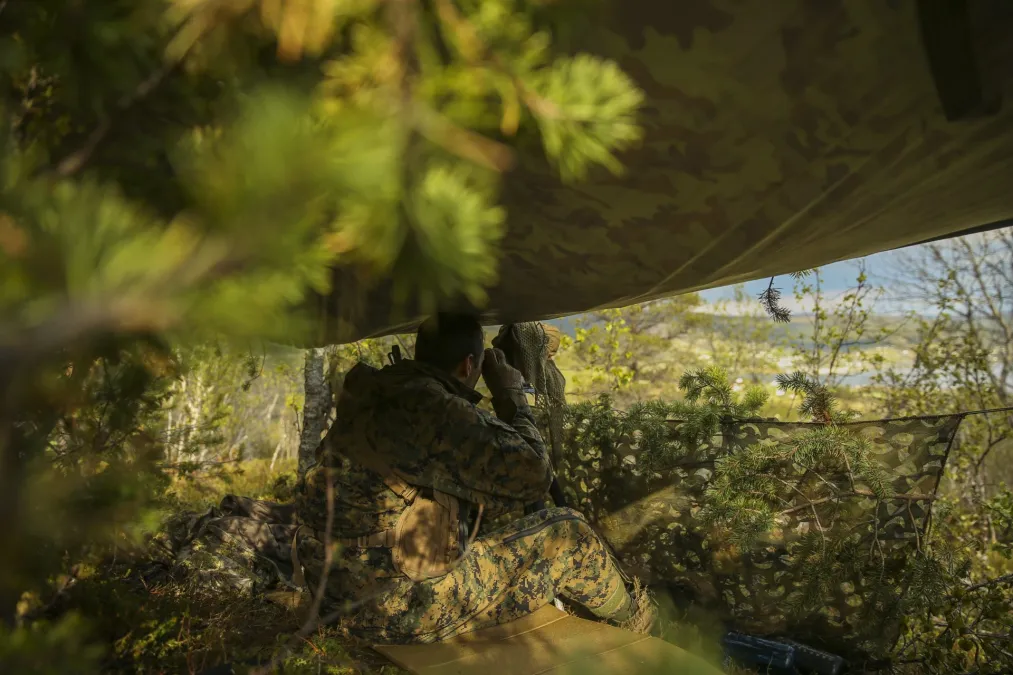
Following the initial infantry instruction, he said the GRC will cover basics: land navigation, demolition, patrolling, observation post establishment, camouflage, call-for-fire, communications and imaging. Bender said that the first course will also cover emplacing sensors.
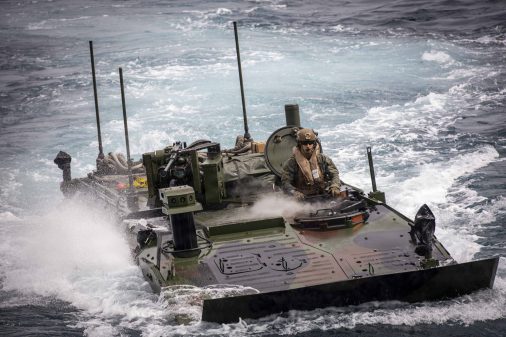
While officials are still working out ARC, for now the course is broken into three blocks that include swim training, helocasting and advanced techniques.
“Right now we’ve got classes that we’re going to teach the Marines so they’re aware of emerging technology and what’s out there,” Bender said. “We’ll familiarize them with the different intelligence entities that are out there as well, and then we will build that into the specific scenario as they go through both GRC and ARC.”
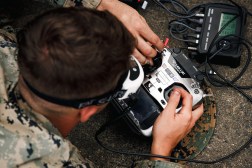
“Both courses will have sensors and robotics centered around the course,” he added.