Army looking toward autonomous robots to recover its downed vehicles from combat zones
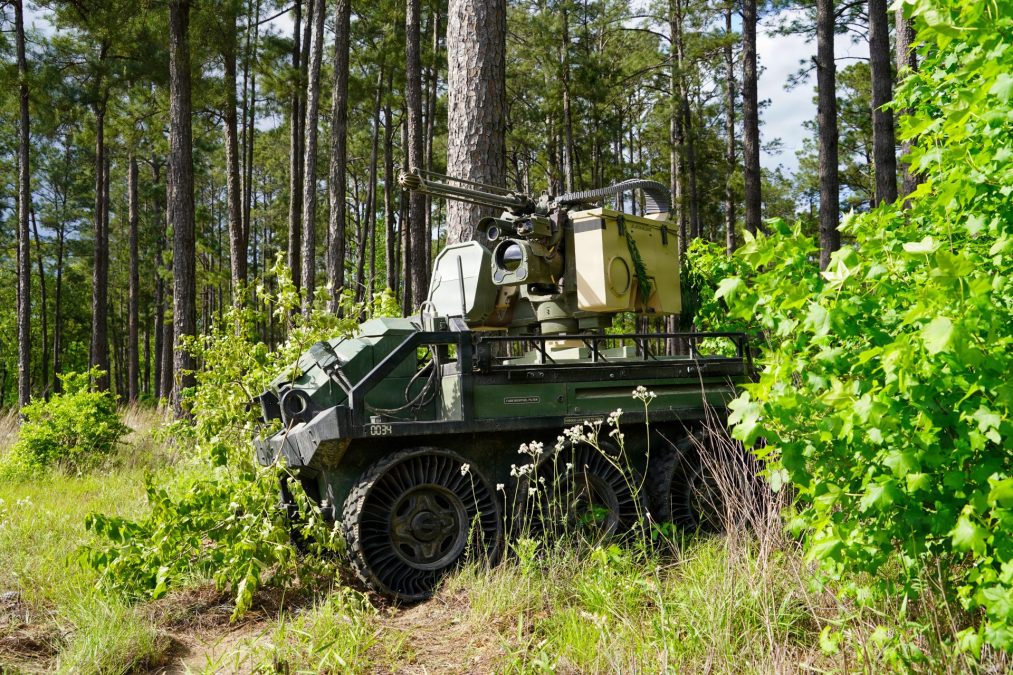
The Army is looking for an autonomous ground vehicle to get its broken platforms out of combat zones, the service said in a notice last week, as it continues exploring the use of robots for difficult battlefield tasks.
In a request for information posted June 17, officials said the service was interested in a “robust, ruggedized” vehicle to help recover disabled equipment in contested environments. The vehicle should be able to execute recovery missions in denied network conditions while reducing the number of soldiers needed to participate without draining resources on the operating unit.
The service has been experimenting with ground robots for various tasks such as medical evacuations and logistics resupply, often looking to Ukraine for solutions after Kyiv significantly bolstered its use of unmanned ground vehicles for such missions amid the war with Russia.
Traditional vehicle recovery is time-and-resource intensive, as the Army’s notice suggests, made worse by the inherent dangers of combat zones. DefenseScoop previously reported on the service’s efforts to use UGVs for the “last tactical mile,” which is considered the final space between support units and forward lines where equipment, ammunition, supplies and casualties pass “under the greatest threat from enemy observation and fires,” the Army said.
“Current vehicle recovery operations in contested environments are resource-intensive and expose soldiers to adversarial threats,” officials wrote in the new RFI. “These missions require significant manpower, including specialized maintenance and security teams, and are fundamentally constrained by human endurance limits.”
If vehicle crews cannot move themselves, even with the assistance of similar, but functioning platforms, units will deploy dedicated recovery assets specifically designed to pull them out, according to service doctrine. Once deployed, those teams — replete with mechanics, parts, winches, tows, and other equipment — become increasingly exposed to enemy attack while arduously rigging, repairing and otherwise recovering the broken equipment.
The Ukrainian military has used UGVs to recover vehicles, including other robotic vehicles. In one notable video last year, Ukrainian ground robots were shown using nets and hooks to pull disabled UGVs and drones off the battlefield.
Like traditional recovery missions, the purpose is to quickly get stuck vehicles back into the fight or bring them back from forward lines for repair so they can be deployed once again.
Officials said the Army is “open” to modifying existing platforms for recovery missions, another example of the service looking toward ready-made commercial systems or “modular” platforms it already has in its inventory.
Two key components for the request include autonomous capability and the ability for the platform to work when networks are down. The service asked industry several questions for vendors to consider, including how such a platform would rig disabled equipment without human help and navigate difficult terrain when connections are unavailable or degraded.
“The recovery usually happens in a contested environment, which often leads to network communications being Denied, Degraded, Intermittent, and Limited (DDIL),” officials wrote. “All of these factors decrease the Army’s capability to conduct continuous ground recovery operations.”