Navy kicks off search for first increment of CCA drones
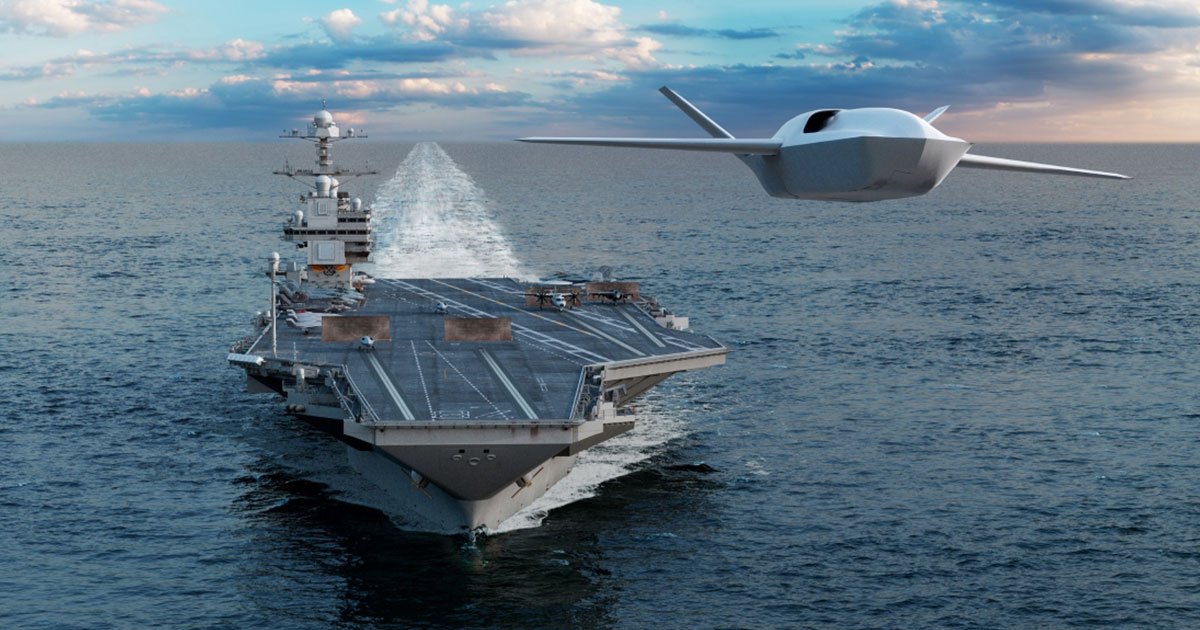
The Navy is finally moving forward with its Collaborative Combat Aircraft (CCA) program, asking industry to submit ideas for carrier-capable loyal wingman prototypes that can fly alongside the service’s manned platforms.
A request for information posted Monday by Naval Air Systems Command calls for two “fully functional, unmanned autonomous prototype air vehicle(s)” that can operate from both Ford- and Nimitz-class carriers. The Navy intends to move on an aggressive timeline — with the goal of having the drones achieve shore-based carrier certification within three years of an award, according to the RFI.
The responses will inform the next steps for the sea service’s CCA Increment 1 program, managed by NAVAIR’s Future Advanced Capability Program Office. Much like similar efforts across the military, the Navy is seeking a robotic wingman aircraft that can augment the service’s fourth- and fifth-generation fighter fleets with additional capabilities as part of a manned-unmanned team.
“The Navy Collaborative Combat Aircraft (CCA) program was established to provide the Carrier Air Wing (CVW) with lethal, survivable and persistent, versatile platforms capable of operating directly from the sea,” the RFI stated. “As threat networks grow increasingly complex, the Navy must adapt combat strategies by focusing on collaborative manned-unmanned operations, modular open standards, and rapid, cost-effective prototyping.”
Overall, the CCA concept is a critical part of the Defense Department’s modernization plans. The Air Force has already entered a production deal with General Atomics and Anduril for Increment 1 of its program, while Northrop Grumman is working with Kratos to build similar drones for the Marine Corps.
The Navy has not moved as quickly as the other services, however it has been working with General Atomics since October 2025 to develop conceptual designs of a carrier-based platform.
Although the drones will each have domain-specific mission requirements, all three services are part of a collaborative agreement that ensures each system shares a handful of standardized components.
Notably, the Navy is specifically calling for development and evaluation of two fairly mature prototypes that have a clear path to carrier certification — rather than asking industry for basic design concepts that will be later refined.
Under the service’s proposed timeline, the first prototype would fly no later than two years after the Navy awards a contract. Carrier certification would be required by the end of the program’s three-year prototype effort, the RFI noted. The Navy plans for prototype testing to be led by the eventual contractors on the program, and evaluations will include live-virtual-constructive, ground and flight tests.
Furthermore, the Navy is targeting a unit cost of $30 million for its CCA, according to the RFI. At about one-third the price of an F-35 Lightning II fighter jet, the budget is similar to the Air Force’s CCA Increment 1 program.
The sea service wants to operate the drones onboard aircraft carriers using existing infrastructure and minimal specialized support equipment. The RFI notes the prototypes should be able to perform catapult takeoffs and arrested landings, as well as be compatible with the Navy’s MD-5 Unmanned Carrier Aviation Mission Control System (UMCS) — also used for the service’s MQ-25 Stingray drone.
The prototypes will also be required to have a substantial weapons-carrying capability. The Navy is seeking CCA systems that can carry four externally mounted weapons weighing up to 2,500 pounds each during relevant flight and carrier-certification envelopes.
Responses to the RFI are due by Sept. 18.