Army solicits industry for portable platform to deliver RF effects
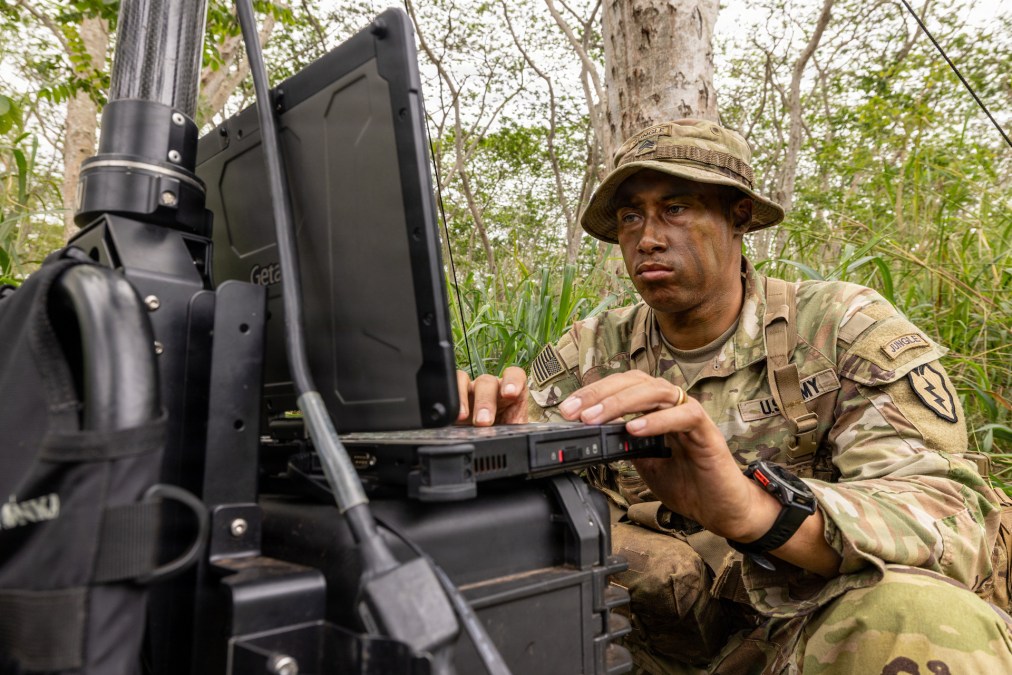
The Army took another step Monday in its journey to beef up its communications and electromagnetic spectrum capabilities, releasing a solicitation for a “radio frequency-delivered effects” platform that can be easily transported and employed by troops on the battlefield.
The service in recent years has been pushing to enhance its EMS prowess and ability to share data, including via its “transforming-in-contact” initiative and Next Generation Command and Control effort.
The RF Delivered Effects Platform – Portable 2.0 program, for which the Army is pursuing technology via a commercial solutions opening, is intended to help meet a requirement for a flexible cyber and electromagnetic activities system that can “seamlessly integrate” a variety of payload cards.
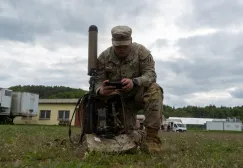
“Its lightweight design — the sum of components weighing no more than 100 pounds for rapid-setup, fixed site and vehicular operations — is portable, ensures ease of transport and deployment, making it ideal for use in stationary positions, or within current U.S. Army tactical vehicles. Transitioning between these states (vehicle mounted to stationary, etc.) must be accomplished within 10 minutes by a single operator, minimizing downtime in critical operations,” officials wrote in the solicitation.
“Designed for advanced communication capabilities, the system must enable remote control of RF platforms over-the-air (OTA), ensuring operational flexibility and reducing physical intervention requirements. It must be fully compatible with established U.S. Army fielded IP communications platforms, potentially eliminating the need for external radio systems and enhancing connectivity across the force. Furthermore, the system must support OTA data transmission across other relevant Army Programs of Record, fostering interoperability and ensuring mission-critical information is shared effectively,” according to the solicitation.
Notably, officials expressed interest in an “optional capability” that would allow the platform to integrate with small drones to extend its range and boost situational awareness, noting that vendor offerings of that nature would be considered as part of the overall evaluation of their solutions.
The RF-delivered effects system must provide a graphical user interface that integrates with existing communications and command-and-control tools, such as the Tactical Assault Kit, and allows re-provisioning of CMOSS cards directly within the chassis, officials noted. It will also be expected to operate in classified and unclassified environments.