DOD inks agreement with Lockheed Martin aimed at accelerating Precision Strike Missile production
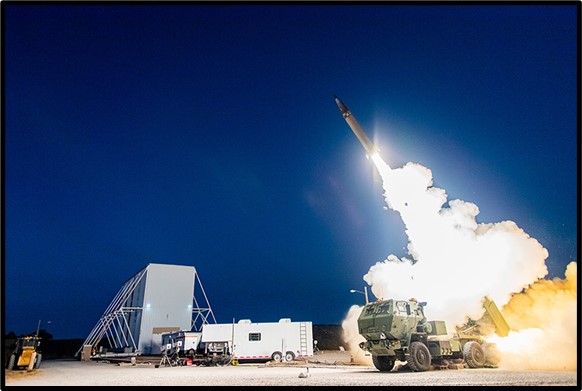
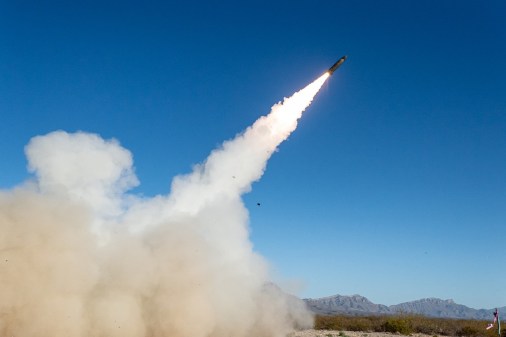
The Defense Department announced three new agreements with industry on Wednesday that will drastically increase production capacity for critical munitions, including the Lockheed Martin-made Precision Strike Missile (PrSM) that recently made its combat debut in the Iran war.
Under one of the deals, Lockheed plans to “make targeted investments in advanced tooling, facility modernization and critical testing equipment” to reduce production lead timelines for the PrSM, according to a Pentagon news release. Along with the indefinite delivery, indefinite quantity (IDIQ) contract worth up to $4.9 billion awarded by the Army last year, the new framework will allow the manufacturer to quadruple PrSM’s production capacity, the company stated.
“Through this agreement, we are actively building the Arsenal of Freedom with speed and urgency,” Michael Duffey, undersecretary of defense for acquisition and sustainment, said in a statement. “By empowering industry to invest in the factory floor, we are building a decisive and enduring advantage for our warfighters to outpace any potential adversary.”
The deal comes as the Pentagon looks to shore up munitions stockpiles amid its ongoing war with Iran, known as Operation Epic Fury. Since initiating the conflict in February, DOD officials, lawmakers and experts have all sounded the alarm over the department’s ability to replenish and maintain healthy inventories of its key weapons.
Executives from major defense contractors met with the Trump administration at the White House earlier this month to discuss how the United States could shore up its munitions production capacity. During the meeting, companies agreed to quadruple production of key weapons, according to a report from Breaking Defense.
Lockheed Martin did not share how much money the company plans to put towards increased PrSM production, nor exactly how many missiles it will be able to produce annually as a result of the framework. According to the Army’s budget documents, the service planned to buy 152 units in fiscal 2026 at a cost of about $560 million.
At the same time, the framework establishes the potential for the Pentagon and Lockheed to negotiate a seven-year contract for PrSM if Congress authorizes multi-year procurement authorities in the future.
While last year’s $4.9 billion IDIQ lets the Army purchase PrSM units on flexible timelines, a multi-year procurement deal would allow the service to buy long-lead components in large batches and likely reduce overall costs of the weapon.
The PrSM Increment 1 made its first combat appearance in the opening days of Operation Epic Fury and is still being used to strike Iranian targets. First deployed by the Army in 2023, the weapon is a surface-to-surface ballistic missile with a range of at least 500 kilometers.
“Just two days ago the U.S. Army launched the longest field artillery strike in Army combat history using Precision Strike Missiles. The strike took out Iranian military infrastructure, demonstrating the U.S. military’s unmatched reach and lethality,” Adm. Brad Cooper, head of U.S. Central Command, said in a video posted to X on Saturday.
The service intends to have the PrSM eventually replace the MGM-140 Army Tactical Missile System (ATACMS). The Army is also developing a number of follow-on increments, including an anti-ship variant and others with even longer ranges and additional payload options.
The Trump administration hasn’t submitted its budget request for fiscal 2027 and the next five-year spending plan known as the future years defense program, but it’s expected to ask for additional funding for PrSM.
“I don’t want to focus on that current operation [against Iran] only, but with regards to the capabilities that PrSM brings to the fight, we want greater magazine depth, we want greater inventory,” Lt. Gen. Frank Lozano, the Army’s portfolio acquisition executive for fires, said at the McAleese Defense Programs Conference last week.
Meanwhile, the Defense Department also announced two more framework agreements with industry on Wednesday designed to boost production capacity of munition subsystems and components, including one with BAE Systems and another with Honeywell Aerospace.
The seven-year deal with BAE will accelerate production of seekers for the Army’s Terminal High Altitude Area Defense (THAAD) interceptor missile. It follows a January agreement made between the Pentagon and Lockheed Martin — which manufactures THAADs — to quadruple the munition’s production capacity.
“This agreement with BAE Systems sends a clear, stable, long-term demand signal,” Duffey said in a statement. “We are providing the certainty our partners need to invest, expand, and hire. This is how we place the industrial base on a wartime footing.”
As for Honeywell, the company has agreed to invest $500 million of internal funding towards manufacturing of several munition components, including navigation systems, actuators and electronic warfare solutions, according to the Pentagon.