Pentagon awards $80M task order for AI-enabled tech to defend Air Force bases against small drones
AeroVironment has been awarded a new task order for AI-enabled technologies that are expected to help protect Air Force bases from small unmanned aerial systems, the company announced Monday.
The $80.5 million deal is the first task order being executed under a $500 million Army-awarded contract with AV that the Pentagon announced last week.
The effort is part of the Domestic Shield initiative led by Joint Interagency Task Force 401, according to the contractor and the Defense Department. JIATF-401 is an Army-led organization that was stood up last year to spearhead a wide range of counter-drone technology projects to help defend U.S. military installations and other sites against growing small UAS threats in the homeland and overseas.
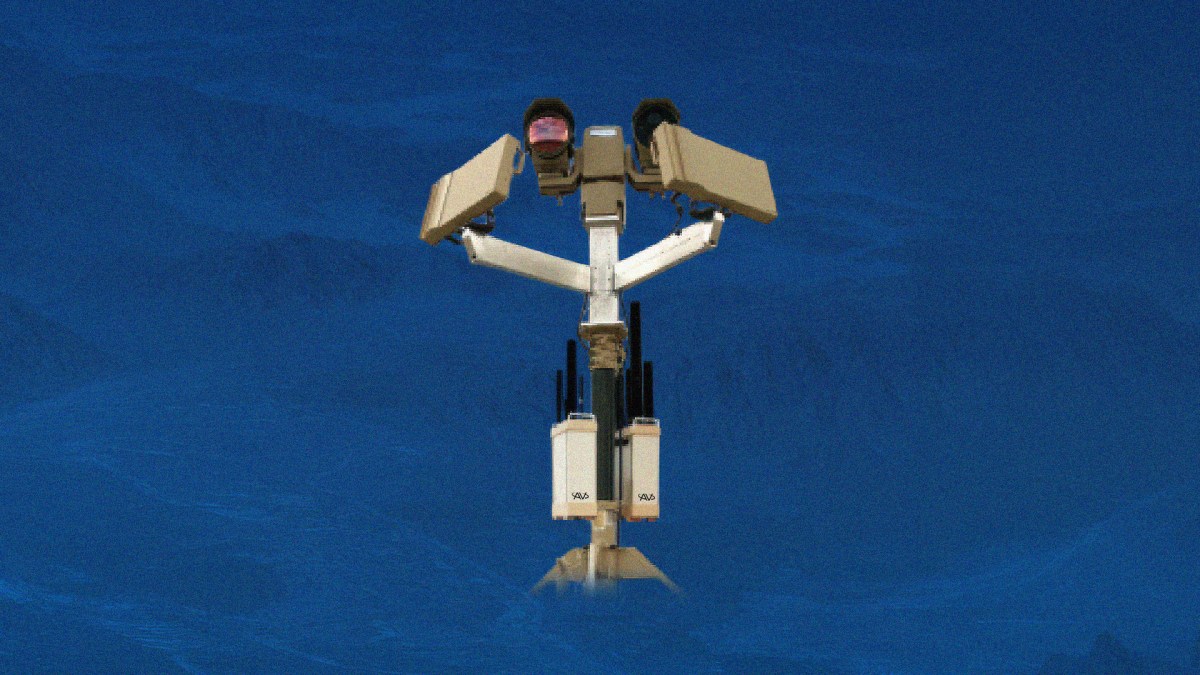
The new task order will support “layered” base defense for Air Force Global Strike Command, according to AV, which will provide its Titan-MS system and other tech such as Titan 4, electro-optical/infrared camera payloads, and counter-drone radar systems.
Titan-MS is an “AI-powered, multi-sensor fusion solution that detects, identifies, tracks, defeats and reports on unmanned system threats,” the company wrote in a press release. The platform “fuses AI and machine learning algorithms from industry-leading sensors to counter both RF-controlled and autonomous drone threats.”
Air Force Global Strike Command’s mission is to provide long-range attack capabilities, such as bombers and intercontinental ballistic missiles, for the joint force. Earlier this year, Barksdale Air Force Base in Louisiana, which falls under AFGCS, “experienced several unauthorized drone incursions that varied in duration and number of drones,” the command stated in a press release in March.
Under the new $500 million indefinite-delivery, indefinite-quantity contract with the Pentagon, AV is expected to supply “a range of scalable c-UAS capabilities,” according to an Army news release published Sunday.
“A key element of these capabilities is their ability to be fully interoperable, which is a crucial component of a strong, layered drone defense,” the release stated, noting that the tech can be tailored for fixed-site or mobile employment.
The new task order for the Titan counter-drone capabilities will procure “detect and defeat options suited for complex operational environments,” per the news release.
“JIATF-401 is continuously working to bolster the Services’ abilities to protect warfighters and individual installations,” Col. Jason Idleman, chief of the task force’s multi-domain operations division, said in a statement. “This investment provides operators with the tools to detect, track, and defend against illicit drones. Providing top-tier technology to our warfighters enables them to effectively respond to these rapidly evolving threats.”